
The NFT boom was never really about JPEGs. It was an early attempt to turn ownership from a record into something that could move, verify, and execute through software.
Before blockchain technology, digital ownership was difficult to establish.
The internet made it easy to:
Copy digital files
Share content globally
Duplicate images and media
However, digital systems lacked a reliable way to prove:
Who created an item? Who owned an original version? How ownership changed over time?
You could buy a digital game item, but the platform ultimately controlled it. You could purchase a domain name, but a centralized registry maintained the record. You could collect digital art, but there was no universally accessible system that could independently verify which wallet controlled a particular digital asset.
Blockchain introduced a different possibility.
Instead of asking a company to maintain the definitive record of who owns something, a blockchain could maintain a shared record that anyone could inspect.
NFTs made that concept tangible.
The important innovation wasn't that the token was unique.
It was that the token could carry rules about its ownership.
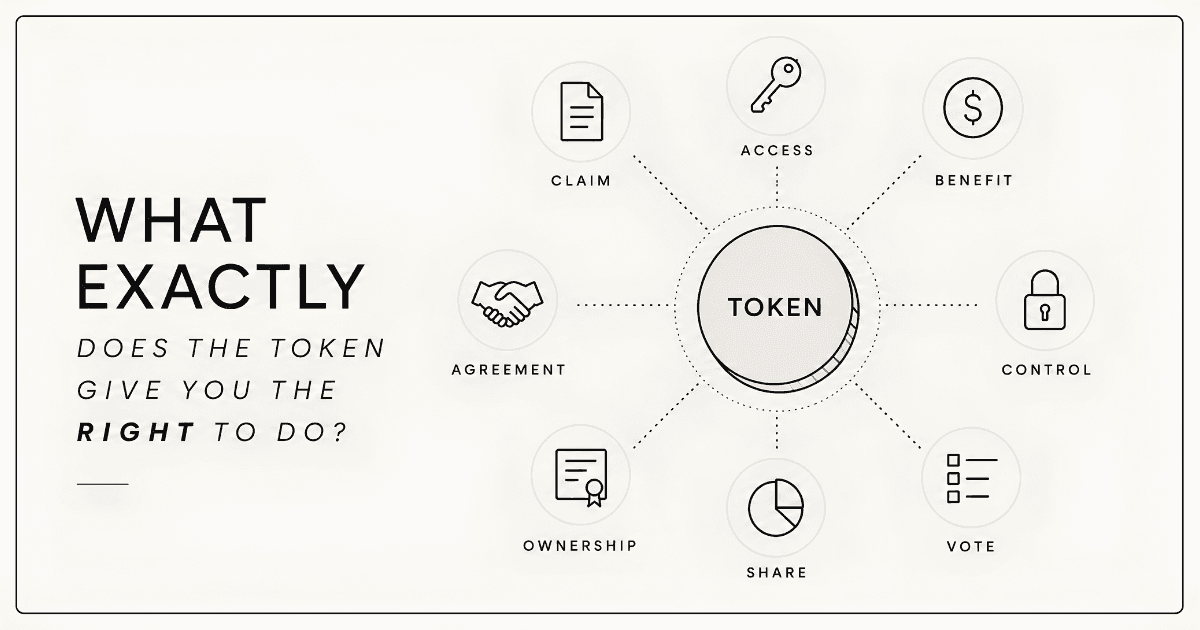
The ERC-721 standard, proposed in 2018, established a common framework for unique tokens on Ethereum. It included functions for identifying a specific token, determining its current owner, approving another party to move it, and transferring it between addresses. The standard explicitly contemplated NFTs representing both digital and physical assets.
That distinction matters.
An NFT wasn't simply a digital certificate saying:
“Mary owns this.”
It could be a piece of software capable of answering: Who owns this? Can they transfer it? Who is authorized to transfer it? What happens when it moves? Those rules could be embedded into the infrastructure of the asset itself. That is where the idea of programmable ownership begins.
Art was the perfect laboratory
Digital art happened to be one of the first places where this idea became culturally visible. Why? Because artists had an ownership problem that was already obvious.
Digital files are infinitely reproducible. If I make a painting, there is only one original canvas. If I make a digital artwork, I can send you a copy in seconds. The NFT didn't solve the problem of copying the artwork.
It solved a different problem: How do we establish a unique, transferable claim around a digital object?
That distinction is important.
An NFT does not automatically mean that the token holder owns the copyright, intellectual property, or every right associated with the artwork. Those rights depend on the terms governing the particular work. What the blockchain can establish is ownership of the token itself.
And that was enough to create an entirely new market. Suddenly, digital objects could have provenance, transaction histories, identifiable owners and transferable scarcity.
The artwork could still be copied. But the ownership record couldn't simply be duplicated in the same way. We couldn't "right click save" and claim we owned the artwork.
Then ownership started becoming programmable
Once the basic concept existed, people began asking a more interesting question: What else can an ownership record do? A token could provide access to something.
It could function as a membership credential. It could represent a ticket. It could change based on information stored elsewhere. It could be transferred. It could be restricted. It could interact with another smart contract.
And developers began experimenting with rules around what happens when the asset changes hands. Even royalties illustrate the evolution.
ERC-2981 introduced a standardized way for NFTs to communicate royalty information to marketplaces and other participants. Importantly, the standard itself does not guarantee payment; it provides information that marketplaces can use to facilitate royalties.
That distinction is revealing. The industry was learning that putting information on-chain is not the same thing as enforcing a real-world outcome.
That lesson will become increasingly important as tokenization moves beyond digital collectibles.
The NFT was the experiment. The asset is the next question.
This is where the conversation gets much bigger.
If a token can represent ownership of a digital artwork, could it represent ownership of something physical?
A piece of real estate? A collectible? A vehicle? A share of an investment? A private credit instrument? A fund? A claim on future cash flows?
The technical answer is often some variation of yes.
But the harder question is: What exactly does the token legally and economically represent?
That is where the world of NFTs begins to collide with the world of real-world assets, or RWAs.
And the lessons from NFTs suddenly become extremely relevant. Because tokenization isn't simply: Put an asset on a blockchain. It is the process of connecting an asset, a legal claim, a digital representation, and a set of rules into an operating system for ownership.
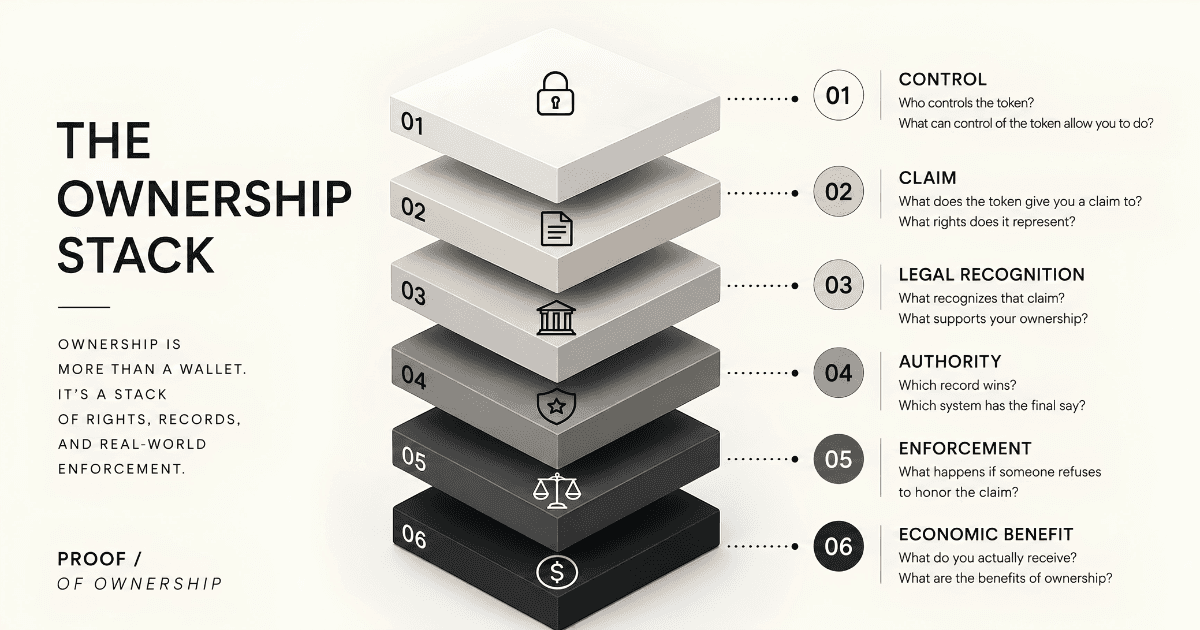
The blockchain can tell us who controls a token. It cannot, by itself, make a legal claim true. That requires infrastructure outside the chain: contracts, custodians, registries, courts, regulation, identity systems, and trusted relationships between the digital representation and the underlying asset.
In other words: The technology can prove one layer of ownership. The rest of the system has to prove the others.
That's why NFTs matter more than the market remembers
The NFT market may ultimately be remembered less for the prices paid for digital collectibles than for the questions it forced us to ask.
What does it mean to own something digital? What is the difference between owning an object and owning the rights associated with it? Can ownership move without an intermediary?
Can ownership have rules? Can those rules be automated? Can provenance become part of an asset's history? Can an asset become both something you own and something that software can interact with?
These were not merely questions about JPEGs. They were early questions about the architecture of ownership itself. And now those questions are moving into much larger markets.
The next phase isn't about putting everything on-chain.
It's about deciding what should be on-chain and why.
That may ultimately be the more important conversation. Because tokenization doesn't automatically create liquidity. A blockchain doesn't automatically create legal ownership. A token doesn't automatically make an illiquid asset liquid.
And putting an asset on-chain doesn't automatically make it valuable. The real opportunity is much more subtle: What becomes possible when ownership is no longer just something recorded after a transaction, but something that can participate in the transaction itself?
For example, programmable money embeds rules, logic, and conditions directly into the movement of funds, and it’s reshaping how digital payments work. Instead of relying on separate systems to approve, reconcile, or enforce controls after a payment happens, programmable money allows payments to be executed automatically when predefined conditions are met.
This is the shift I'm interested in. NFTs were one of the earliest cultural experiments. Real-world assets is the economic one.
And the question connecting them is surprisingly simple: