What Does It Actually Mean to Show Digital Work?
There's a question I get from digital artists constantly, and it usually sounds like this:
"I make work that lives on a screen but where do I show it?"
It's a fair question, and for a long time in this region, the honest answer was: not many places. The infrastructure just wasn't there. No recurring programming, no dedicated exhibition contexts, no clear pathway from making work to showing it publicly in a way that felt serious.
That's changing, but slowly and in the meantime, artists are left navigating a space that wasn't really built for them.
So here's what I actually think matters when you're trying to show screen-based work, whether that's video, animation, generative art, real-time capture, or anything else that needs a display to exist.
What is the best way to share art?
The best way to show your digital art is online, as it offers unparalleled reach and longevity. With the internet, your art can be seen by anyone, anywhere in the world, at any time! Once you put your work online, it can be discovered by new audiences for years to come.
Resolution and display context are part of that work.
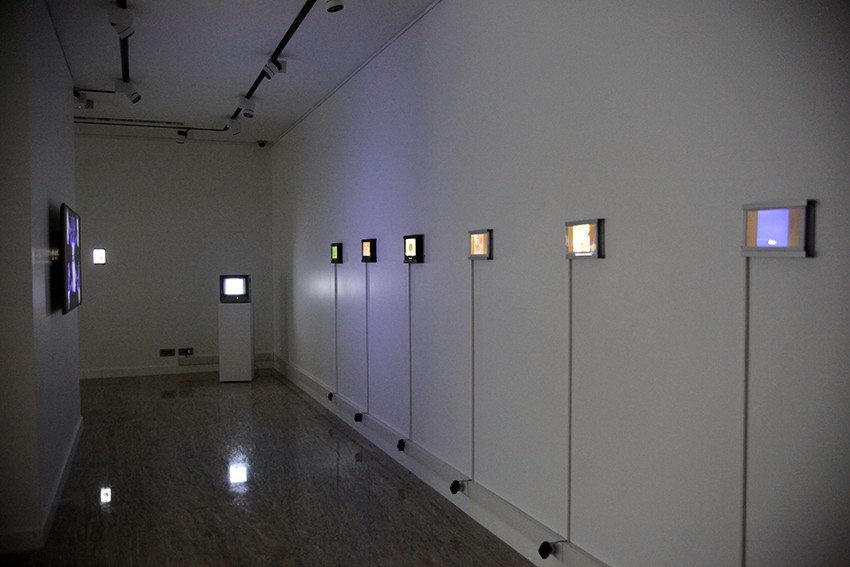
Consider Location: A piece that looks extraordinary on a calibrated monitor at the right brightness can look completely flat on a consumer TV with the wrong settings. Before you submit anywhere, ask what the display situation is. Size, brightness, aspect ratio, looping capability, these are curatorial questions, not technical afterthoughts.
Online presence is a legitimate exhibition context. Not a compromise, not a placeholder. The internet is where most people encounter art now, and a strong, intentional online presence — your own site, platforms & curated digital galleries — is a real exhibition history. Treat it like one!
Documentation matters more than you think. For physical-digital work especially, how you document and describe what someone will experience is often more important than a still image. Write about time, about movement, about what changes. Give curators and collectors the language they need to talk about your work.
You may have the following questions:
How can I share my art without social media?
Sharing your art without relying on social media is entirely possible, and one of the most effective ways to do so is through an email newsletter. An email newsletter lets you connect directly with your audience by sending updates about your latest work, sneak peeks at new projects, and exclusive content.
By building an email list, you create a community of fans who are genuinely interested in your art. In your newsletters, you can share beautiful images of your pieces, talk about your creative process, and share the stories behind your art. It's also a perfect place to announce exhibitions, sales, or special offers.
Plus, email feels more personal, and because people have signed up to hear from you, you know they're excited to see your updates.
How do I exhibit my own art?
Digital artists can take it to the next level by showcasing their art by hosting their own virtual exhibitions. Platforms like Spatial let you create cool, interactive galleries where people can explore your artwork in a virtual space.
Consider designing your own virtual gallery, where visitors can wander through and get up close with your pieces just like in a real exhibition. It’s a fun way to present your art in a fresh, engaging way and reach art lovers from all around the world. Plus, you get to be the curator and create an experience that’s totally unique to your style.
How do I showcase my artwork?
One great option for showcasing your artwork is to submit it to exhibitions and open calls. These are fantastic opportunities to display your art in galleries or online shows, allowing you to reach a wider audience and gain more exposure.
Whether it's a local art fair, a themed group exhibition, or a prestigious art competition, participating in these events can help you connect with art enthusiasts, collectors, and fellow artists. Not only does this give your work a physical or virtual space to shine, but it also adds credibility to your portfolio and can lead to valuable networking opportunities.
Plus, being featured in exhibitions can help build your reputation and open doors to future exhibitions and collaborations. Collaborating with other digital artists or brands can introduce your work to new audiences.
The exhibition pathways for digital artists are growing. Regional programs, platform-based shows, institutional digital galleries, this infrastructure is being built in real time. The old divisions between digital and contemporary art are breaking down. But there is still no unified space to make sense of the new art ecosystem.
The artists who understand how their work operates in the world, not just how it's made, are the ones who will move through that infrastructure most effectively.